Search in blog
Blog tags
Photo gallery
No featured images
Every woodworking project begins with a digital design. For a CNC machine to faithfully reproduce it in the material, it must constantly and with extreme accuracy know where its tool (cutter, spindle) is located. It is encoders, acting as the "eyes" of the control system, that provide this critical data on the position and speed of the motors.
Measurement inaccuracy not only results in visible errors in the finished product. It also results in material loss, rework time, and reduced overall machine efficiency.
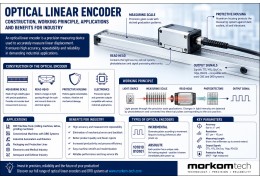
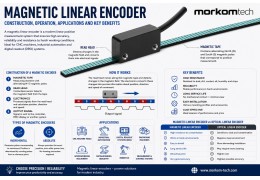
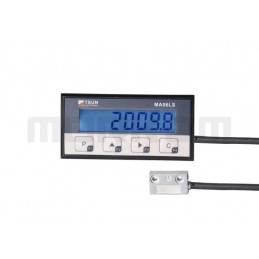
Traditional optical encoders, while precise, can be sensitive to harsh industrial environments. Magnetic measurement encoders offer a significant advantage in this regard. Their operating principle is based on measuring changes in the magnetic field, making them extremely durable.
· Resistance to Contamination: Wood dust, resin, and filings are commonplace in carpentry shops. Magnetic encoders are perfectly protected against these factors. They have no exposed optical elements that could become dirty and fail.
· High Reliability and Durability: The absence of delicate components, such as glass discs in optical encoders, translates into a significantly longer service life, even with intensive use.
· Stable Operation in Humid Environments: Wood reacts with air humidity, and machining itself may require cooling. Magnetic encoders are resistant to moisture and cooling mist.
· High Speed Compatibility: Modern woodworking machines operate at high spindle speeds. These encoders easily meet these requirements, ensuring precise measurement even at high RPMs.
Where exactly are these advanced components used? In virtually any CNC machine requiring motion control.
1. X, Y, and Z Axis Positioning: This is a fundamental application. Magnetic encoders mounted on servo motors provide feedback on the precise position of the spindle or worktable. This ensures the cutter is positioned precisely with micron accuracy.
2. Spindle Control: Precise control of spindle speed is crucial for machining quality and tool life. The encoder provides data that allows the system to maintain constant RPM even under load.
3. Advanced Multi-Axis Machines: 5-axis machines are often used in carpentry and furniture making. These require extremely reliable and compact encoders that can perform well in complex kinematic systems. Absolute magnetic encoders provide position information immediately after the machine is turned on, without the need for "zeroing."
Choosing components for machines producing furniture, flooring, or interior design elements has a direct impact on the final product and production profitability. Magnetic measuring encoders are not just an electronic component. They are an investment in guaranteed precision, reduced downtime, and increased plant throughput.
At Morkom Tech, we understand the challenges of the modern woodworking industry. That's why we offer modern, rugged magnetic encoders that are ready to meet the requirements of your machine tool. Contact our specialists to select the perfect solution for your company.
Interested? Check out our encoder range or contact us, and we'll help you choose the best solution for your application.
The use of safety curtains in industry
Absolute measuring potentiometers of the LCF, LPF and LTF series
Safety Light Curtain Controllers
Strain Gauges – What are they and how do they work?
ALS-D Series Optical Scales: precision in every detail