Search in blog
Blog tags
Photo gallery
No featured images
n this article, we explain the role light curtains play in automatic sorting, why they are standard in modern intralogistics systems, and what to consider when selecting them.
⸻
Automatic sorting systems include roller and belt conveyors, cross-section sorters, push-tray systems, wheel sorters, and robot and stacker crane solutions. These applications present numerous hazardous zones where human contact with machine movement can lead to serious injuries.
Particularly critical are:
• product entry and exit points,
• transport direction changes,
• buffer and accumulation zones,
• areas requiring manual operator intervention.
It is precisely in these locations that safety light curtains are most effective.
⸻
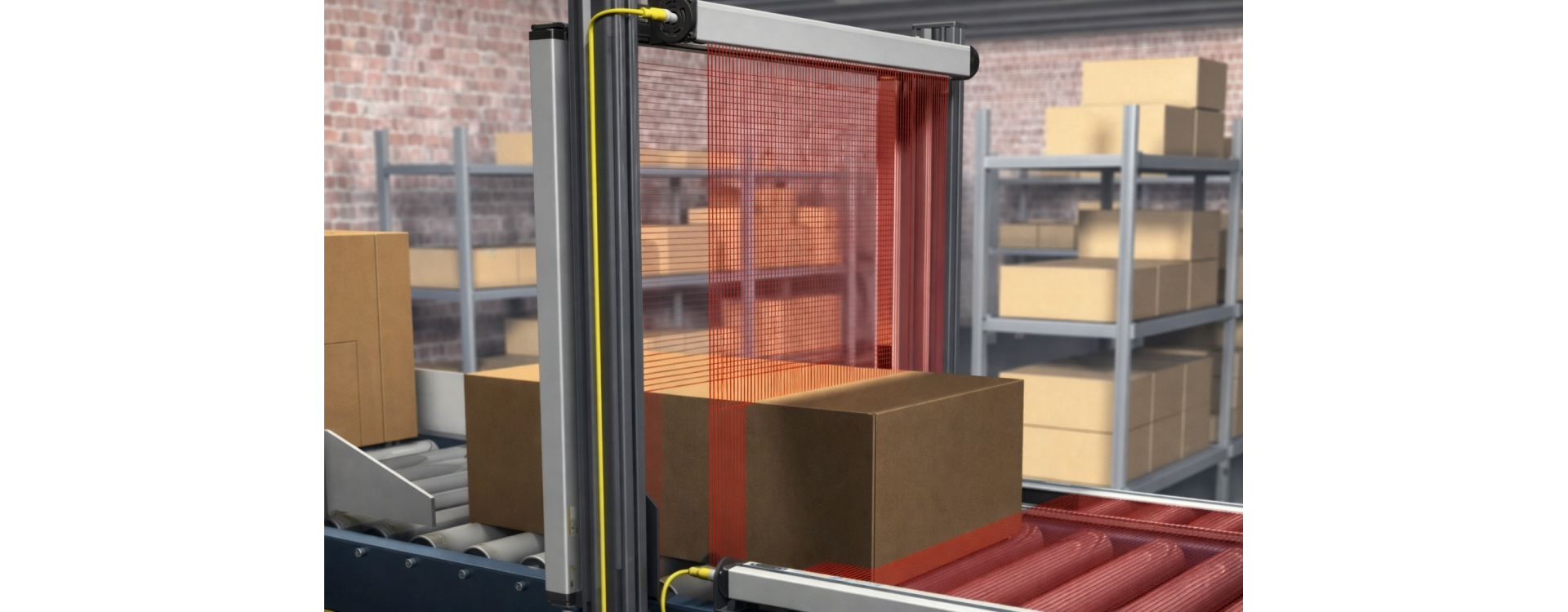
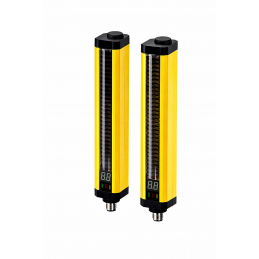
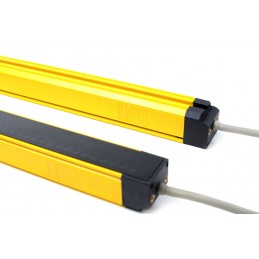
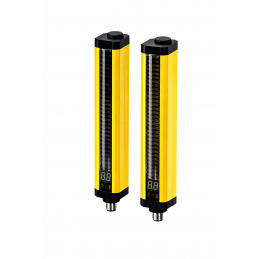
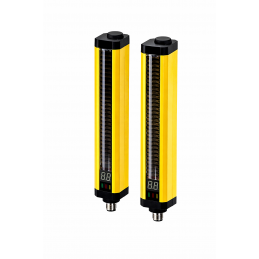
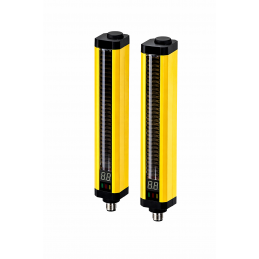
A light curtain is an active safety device consisting of a transmitter and a receiver, between which a grid of invisible infrared beams is created. Interrupting even one beam triggers an immediate response from the control system, most often by stopping the movement of the hazardous machine element.
In automatic sorting, light curtains:
• monitor access to work areas,
• protect operators from accidentally entering hazardous areas,
• enable contactless protection of transport routes,
• do not slow down the sorting process, unlike traditional mechanical guards.
⸻
The use of light curtains in automatic sorting is due to their exceptional functional and operational properties.
Light curtains do not require physical opening or closing of guards, ensuring the sorting process remains smooth, even with very high volumes of parcels per hour.
The ability to adjust resolution, protective field height, and logic functions makes light curtains easily integrated with:
• PLC controllers,
• safety systems,
• advanced sorting algorithms.
The operator maintains full visibility of the process while being effectively protected from the movement of sorters, pushers, or driven rollers.
⸻
Modern light curtains used in automatic sorting systems offer a number of features that enhance their usability:
• blanking – ignoring the presence of fixed elements of the transport system,
• muting – temporarily disabling the protective field during a package's transit,
• EDM – monitoring actuators,
• cascading – combining multiple curtains into a single protective system.
Thanks to these features, light curtains not only provide protection but also actively support the logic of the sorting process.
⸻
In automated sorting, it is crucial to meet the requirements of standards such as:
• PN-EN ISO 13849-1,
• PN-EN IEC 61496,
• Machinery Directive 2006/42/EC.
Properly selected light curtains allow you to achieve the required safety level of PL d or PL e, which is standard in modern logistics installations.
⸻
The selection of a light curtain should take into account:
• detection resolution (e.g., hand, finger),
• height and width of the protection zone,
• speed of the sorting elements,
• environmental conditions (dust, moisture),
• required safety level.
In practice, this means that an individual application must be analyzed to ensure that the light curtain does not limit system performance while providing full personnel protection.
⸻
MORKOM-TECH offers light curtains designed for use in demanding automatic sorting systems, including solutions with high environmental resistance and advanced logic functions. Experience in industrial automation allows for precise matching of devices to specific logistics applications.
⸻
Summary
Light curtains in automatic sorting today are not only a safety feature, but also a key component influencing the efficiency and reliability of the entire system. Their non-contact operation Their efficient operation, flexible configuration, and compliance with standards make them standard in modern logistics centers and production plants.
If automatic sorting needs to be fast, safe, and compliant with applicable regulations, light curtains are the first-choice solution.
The use of safety curtains in industry
Absolute measuring potentiometers of the LCF, LPF and LTF series
Safety Light Curtain Controllers
Strain Gauges – What are they and how do they work?
ALS-D Series Optical Scales: precision in every detail