Search in blog
Blog tags
Photo gallery
No featured images
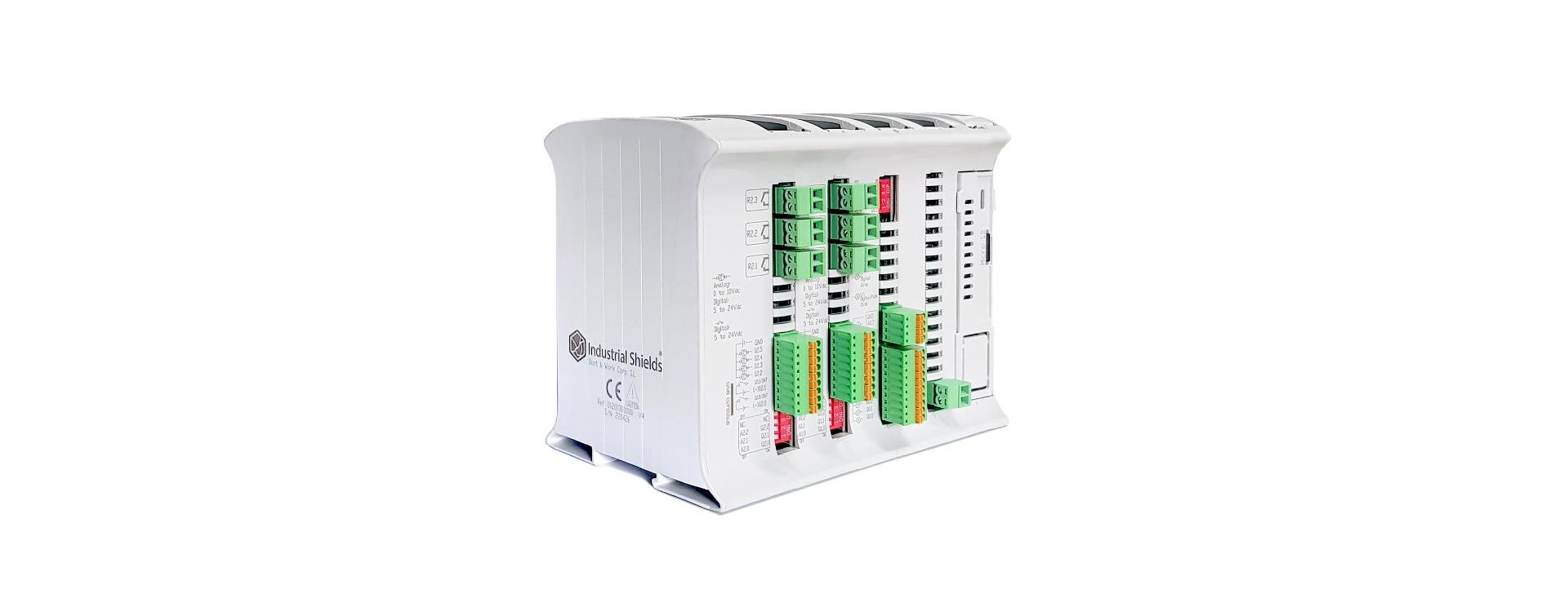
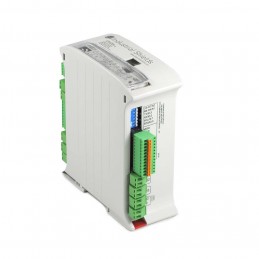
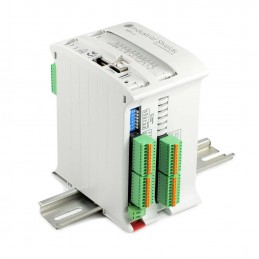
Industrial Shields is a Spanish manufacturer of industrial PLC controllers built on open-source hardware platforms. The company designs DIN-rail mounted controllers adapted for harsh industrial environments while maintaining compatibility with widely used development ecosystems.
Unlike conventional PLC brands, Industrial Shields devices are based on:
• Arduino platforms (AVR, SAMD),
• ESP32 microcontrollers,
• Raspberry Pi industrial solutions.
This architecture allows programming in Arduino IDE (C/C++), Python, or Node-RED, depending on the selected model.
⸻
The most recognized product line includes models such as M-Duino and Ardbox. These controllers typically offer:
• 24V DC digital inputs and outputs,
• Analog inputs (0–10V, 4–20 mA),
• Relay or transistor outputs,
• RS-232 / RS-485 communication,
• Modbus RTU/TCP,
• Ethernet connectivity.
They are commonly used in:
• Machine control systems,
• Building automation,
• Test benches,
• Retrofit projects,
• OEM equipment.
⸻
Raspberry Pi-based PLCs provide higher computing power and expanded connectivity. They can function as:
• Industrial PLC controller,
• Edge computing device,
• IoT gateway,
• Local SCADA server,
• Data acquisition system.
They support:
• Linux OS,
• Node-RED,
• MQTT,
• SQL databases,
• Cloud integration,
• REST APIs.
These features make them ideal for Industry 4.0 and smart manufacturing environments.
⸻
ESP32 PLC models integrate wireless communication and compact design. Key advantages include:
• Built-in WiFi and Bluetooth,
• Fast data processing,
• Low power consumption,
• Compact DIN-rail housing.
Typical applications include:
• Distributed monitoring systems,
• Remote data acquisition,
• Smart installations,
• IoT industrial solutions,
• Energy monitoring systems.
⸻
Industrial Shields PLC controllers are used across multiple sectors due to their flexibility and integration capabilities.
Machine Automation and Production Lines
• Control of drives and motors,
• Sensor integration,
• Process control,
• HMI communication,
• Data logging.
Energy and Monitoring Systems
• Energy consumption monitoring,
• Analog signal acquisition,
• Environmental parameter control,
• Modbus-based device communication.
Integration with Safety Systems
Industrial Shields PLCs can cooperate with:
• Safety light curtains,
• Safety relays,
• Signaling systems,
• Emergency stop circuits.
However, they are not certified safety PLCs (SIL-rated) and must be combined with dedicated safety devices when implementing functional safety systems.
⸻
One of the most distinctive features of Industrial Shields PLC controllers is their open ecosystem. Engineers benefit from:
• Reduced development costs,
• Faster prototyping,
• Access to a large global developer community,
• Flexible programming options,
• Shorter time-to-market.
Controllers are available in multiple I/O configurations. This allows precise adaptation to application requirements without unnecessary hardware expansion.
Industrial Shields devices are designed for modern digital environments. Built-in support for:
• MQTT,
• Cloud services,
• Remote access,
• Database storage,
• Web dashboards,
enables seamless integration into smart factory infrastructures.
⸻
Industrial Shields vs Traditional PLC – Technical Comparison
|
Feature |
Industrial Shields PLC |
Traditional PLC |
|
Architecture |
Open-source based |
Proprietary |
|
Programming |
Arduino IDE, Python, C++ |
Dedicated vendor software |
|
Cost |
Lower entry cost |
Higher |
|
IoT Integration |
Native and flexible |
Often requires additional modules |
|
Safety Certification |
Limited |
Dedicated safety PLC versions available |
⸻
Industrial Shields PLC controllers are particularly suitable for:
• OEM machine manufacturers,
• Custom automation projects,
• Startups developing smart devices,
• Retrofit applications,
• Industrial IoT systems,
• Medium-complexity automation tasks.
For companies seeking cost-efficient and flexible PLC alternatives, they offer a strong technological proposition.
⸻
Conclusion
Industrial Shields PLC controllers represent a modern approach to industrial automation. By combining open-source flexibility with industrial-grade hardware, they provide scalable, innovative and cost-effective solutions for machine control and smart industry applications.
Before implementation, it is essential to evaluate environmental requirements, communication protocols, and functional safety considerations to ensure optimal system performance.
The use of safety curtains in industry
Absolute measuring potentiometers of the LCF, LPF and LTF series
Safety Light Curtain Controllers
Strain Gauges – What are they and how do they work?
ALS-D Series Optical Scales: precision in every detail